 Español
 Portugues
 Pусский
 العربية


Perforated plate
A perforated plate is a flat sheet of material that has been punched, drilled, or laser-cut with a pattern of holes. It is widely used in industrial, architectural, and decorative applications because it combines strength, functionality, and visual appeal. The holes can be round, square, slotted, hexagonal, or custom-shaped, depending on the intended use. Their size, spacing, and arrangement can also be adjusted to control airflow, light transmission, sound absorption, filtration, and weight reduction.Perforated plates are commonly made from materials such as stainless steel, carbon steel, aluminum, galvanized steel, brass, and copper. The choice of material depends on the environment and performance requirements. For example, stainless steel is often selected for its corrosion resistance and durability, while aluminum is preferred for its light weight and attractive appearance. In harsh environments, coated or treated surfaces may be used to improve resistance to rust, wear, and weathering.One of the main advantages of a perforated plate is its versatility. In industrial settings, it is used for screening, filtering, ventilation, drying, sorting, and noise control. It can act as a protective cover, a support layer, or a structural component in machinery and equipment. In architecture and interior design, perforated plates are used for facades, ceilings, sunshades, partitions, railings, and decorative panels. They can create modern visual effects while allowing natural light and air to pass through. In acoustic applications, the perforations help absorb sound and reduce echo, making them useful in auditoriums, offices, and public spaces.The manufacturing process typically begins with selecting the right metal sheet and thickness. Holes are then formed using stamping, punching, CNC machining, or laser cutting. After perforation, the plate may be flattened, deburred, cleaned, painted, powder-coated, or polished to meet specific appearance and performance standards. The open area ratio, which refers to the percentage of the surface covered by holes, is an important design factor. A higher open area allows more airflow or light, while a lower open area provides greater strength and privacy.Perforated plates are valued for their durability, adaptability, and efficiency. They can be customized to meet a wide range of technical and aesthetic needs. Whether used in heavy industry or modern design, they offer a practical solution that balances function and appearance.
Products
Category:
-
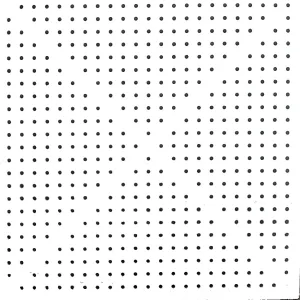
Perforated cement board
Category: Perforated plateBrowse number: 170Number:Release time: 2026-07-19 22:48:39Perforated asbestos-free cement boards feature Class A fire safety and customizable acoustic absorption via precise CNC punching. Autoclave-cured base sheets resist mold, thermal deformation and edge cracking, suitable for offices, auditoriums and transit venues. Adjustable hole open ratios balance noise reduction and rigidity, with long service life and low maintenance for commercial & public construction. -

Perforated plate
Category: Perforated plateBrowse number: 242Number:Release time: 2026-07-19 23:03:24Custom perforated metal plates feature controllable open-area ratios for ventilation, filtration and acoustic adjustment, available in stainless steel, aluminum and galvanized steel. CNC precision punching ensures uniform holes and structural rigidity; anti-corrosion finishing extends service life. Fully recyclable, lightweight and adaptable for facades, industrial filtration and safety walkways with flexible pattern customization.
News
Category:
No search results found!
Case
Category:
No search results found!
Video
Category:
No search results found!
Download
Category:
No search results found!
Job
Category:
No search results found!
Featured Products
No search results found!



 WhatsApp
 Phone
Phone E-mail